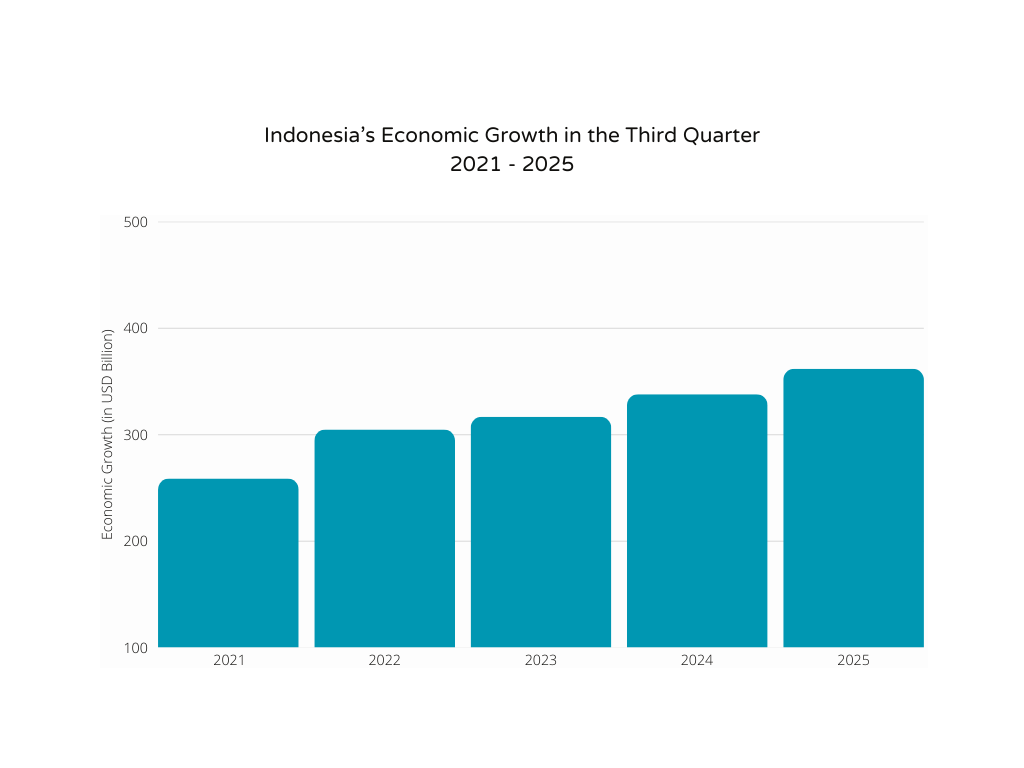
Indonesia’s economy has shown a positive trend over the past five years, based on Statistics Indonesia (BPS) data for the third quarter which continues to improve from 2021 to 2025. This trend reflects a more stable recovery, especially after global economic pressures and the post-pandemic period. One of the most consistent drivers of this growth is strong household spending, which has always been the biggest contributor to Indonesia’s GDP. Steady consumer spending shows that people are more confident, have better purchasing power, and are shifting toward more efficient and adaptive daily shopping habits.
Source: Statistic Indonesia
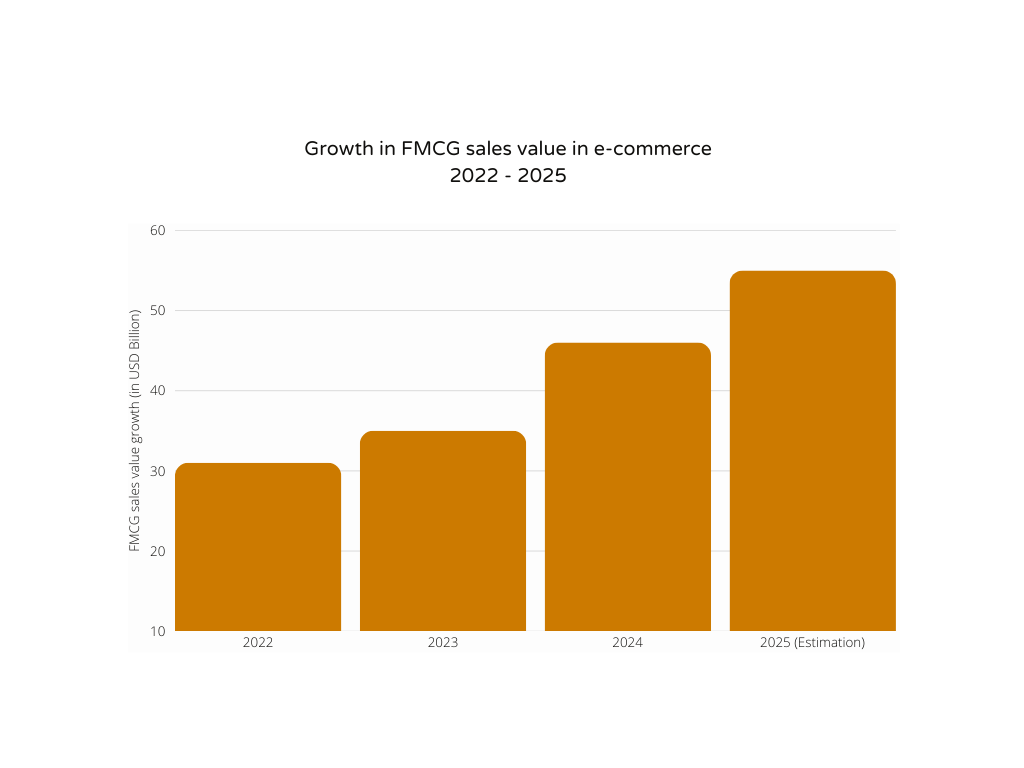
As consumer behavior continues to shift, more people are buying their daily products through e-commerce platforms. This makes digital channels one of the key drivers of household consumption today. Fast Moving Consumer Goods (FMCG) sales on e-commerce have also shown steady growth from 2022 to 2025, proving that Indonesians are becoming more comfortable with digital shopping and increasingly choosing online platforms over traditional stores.
Within these growing online transactions, four product categories that consistently dominate are: Food & Beverage; Beauty & Cosmetics; Health; and Mom & Kids. These categories reflect the evolving needs and lifestyle of Indonesian consumers–from everyday food items and personal care products to wellness and family-related essentials. Overall, their strong performance highlights how dynamic and fast-changing Indonesia’s consumer market has become in the digital era.
Source: CNBC Indonesia
The high level of FMCG consumption in Indonesia has become more evident through recent research. NielsenIQ (NIQ) reported that Indonesians spent Rp256 trillion on daily goods and tech products in Q3 2024. Interestingly, 81% of this spending went to FMCG such as food, drinks, personal care items, and household essentials. This large share shows that FMCG sector remains the strongest and most essential category in Indonesians’ shopping habits and continues to be one of the most resilient sectors during economic fluctuations. This increase indicates that consumer demand for FMCG products is not only stable but continues to rise, driven by broader brand choices, stronger digital access, and lifestyle changes.
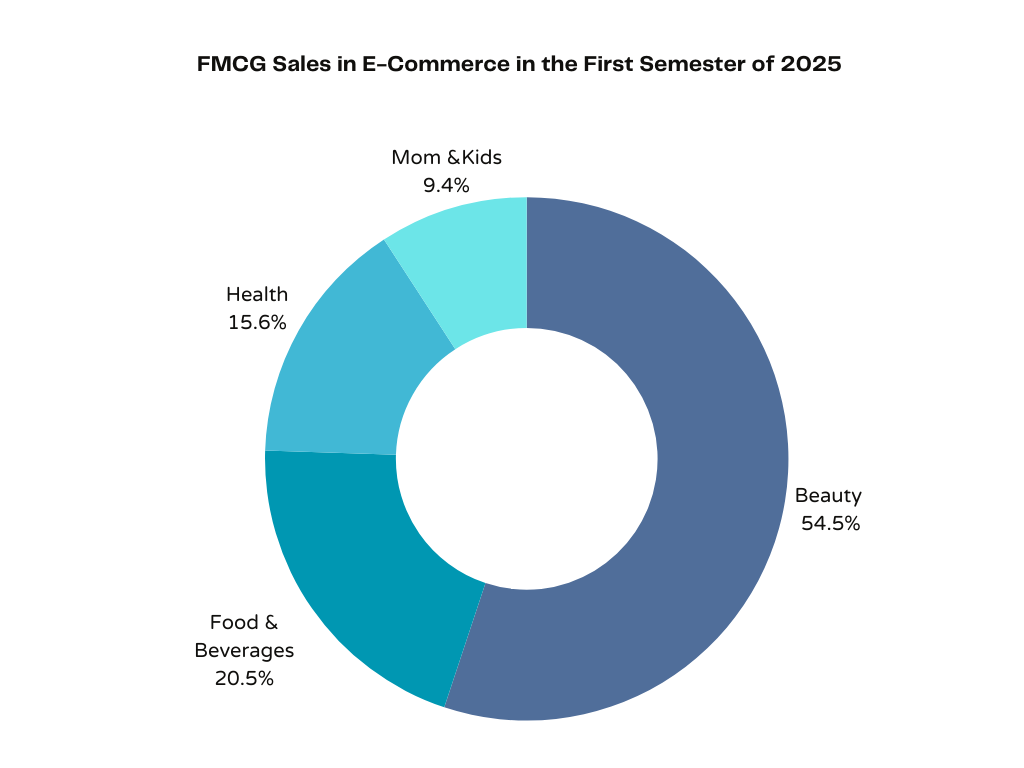
The growing strength of FMCG consumption can also be seen in market performance in 2025. From January to July 2025, FMCG sales reached Rp66 trillion, growing about 26 percent compared to the same period last year. This strong growth highlights that daily needs remain a top priority for consumers, including through e-commerce, which has become one of the main shopping channels. Among all categories, Beauty led with Rp36 trillion in sales, followed by Food & Beverage at Rp13.6 trillion, Health at Rp10.3 trillion, and Mom & Kids at Rp6.2 trillion. These four categories continue to dominate because they reflect consistent consumer needs–from self-care, food, and wellness to family essentials.
Source: GoodStats
Beauty products were the best-selling FMCG category from January to July 2025, reaching a total value of Rp36 trillion. This high figure shows that Indonesians’ interest in beauty products is increasing and becoming more diverse. In the beauty category, lipstick was the top-selling cosmetic product and contributed the largest share of total sales. Meanwhile, in skincare, the most popular items were facial cleansers, facial moisturizers, and sunscreen–all of which were the main drivers of skincare growth. These basic daily-care products are part of many consumers’ everyday routines, which keeps their demand strong throughout the year.
Food & Beverage (F&B) sector recorded sales of Rp13.6 trillion and remained one of the most stable FMCG categories. F&B products are basic household necessities; therefore, their demand stays strong even when economic conditions or shopping trends change. The rise of e-commerce has also expanded the distribution of F&B products, especially ready-to-eat and practical items that are popular among urban consumers. This shows that F&B continues to be an important driver of FMCG consumption in Indonesia.
Health category reached around Rp10.3 trillion in sales, reflecting the growing awareness of healthy living and long-term personal care among Indonesians. This growth is supported by consumers who now buy health-related products more regularly through digital platforms—whether for prevention, light treatment, or daily needs. This trend shows that health is becoming a higher priority in household spending.
Mom & Kids category recorded Rp6.2 trillion in sales, highlighting the steady demand for products related to mothers and children. Items in this category tend to have consistent demand because they are essential and used regularly. The growth of e-commerce has also made it easier for families to access a wider range of Mom & Kids products at competitive prices, supporting the increase in transactions throughout 2025.
Based on all the trends and data above, we can conclude that Indonesia’s FMCG market in 2025 offers very strong business opportunities, especially for companies that can take advantage of digital channels. Stable consumption growth, dominance of e-commerce transactions, and the strong market performance show that people’s daily needs continue to rise and are becoming more diverse. The shift toward digital shopping also creates new opportunities for brands to reach consumers more quickly and widely. This opens the door for businesses to strengthen product innovation, increase visibility on online platforms, and optimize more personalized and relevant marketing strategies. By understanding market dynamics and shifting consumer behavior, businesses can capture this growth momentum and strengthen their position in Indonesia’s increasingly competitive FMCG sector.
In addition, the FMCG market in 2025 presents significant opportunities for many players, including startups, investors, distributors, and retailers. Stable demand, fast product turnover, and the dominance of e-commerce show that people’s need for everyday goods keeps increasing. The consistent demand and relatively low risk make this sector attractive for investment and profitable for distributors and retailers who rely on high-volume sales. Source: Statistic Indonesia, CNBC Indonesia, GoodStats, and Revenue Scaler
Source: Statistic Indonesia, CNBC Indonesia, GoodStats, and Revenue Scaler
Written by Nada Putri Naila – Kadin Business Service Desk