Indonesia strengthening its role in the global halal market by expanding exports, driving sustainable product innovation, and upholding clean and ethical production standards
Global Muslim Demographics and Market Potential
The global Muslim population is estimated at more than 2.05 billion people, representing more than a quarter of the world’s 8.2 billion inhabitants. Islam–the world’s second-largest religion–is officially recognized in the religious systems of 26 countries across Asia, Africa, the Middle East, and sub-Saharan Africa. With its rapid growth, the global Muslim community continues to expand in size, influence, and economic power
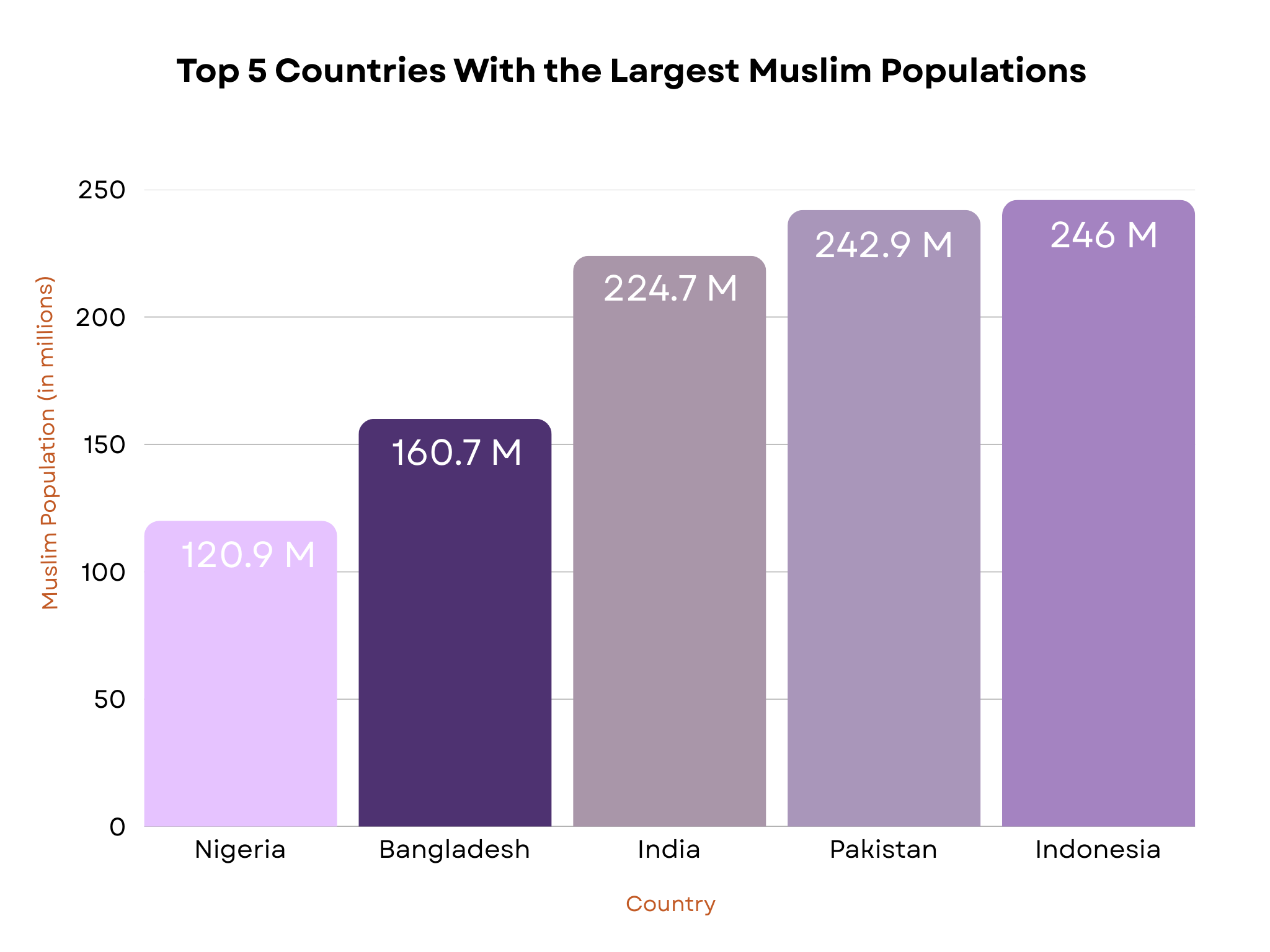
Source: Times Prayer (November 2025)
The scale of the global Muslim population is reflected across several major countries in Asia and Africa, each contributing significantly to the world’s Muslim demographic landscape. Among them, Indonesia stands out with the largest Muslim population globally. According to Times Prayer in November 2025, Indonesia is home to approximately 246 million Muslims–significantly more than other large Muslim-majority populations such as Pakistan, India, Bangladesh, and Nigeria. This demographic advantage positions Indonesia as a key player in the global halal market
What does Halal Mean?
Halal, meaning “permissible” in Arabic, refers to products and practices that comply with Islamic law. However, the concept extends beyond religion. Halal-certified products are manufactured with strict hygiene procedures, full traceability, and responsible sourcing that prioritize safety and transparency. They are considered clean, as they avoid harmful or prohibited ingredients, and ethical, as they uphold humane animal welfare, as well as fair, and sustainable production standards. This makes halal products increasingly aligned with modern consumer expectations for integrity and quality
As the country with the world’s largest Muslim population, Indonesia places high importance on ensuring that products in the market circulation meet halal standards. This commitment is formalized through the Halal Product Assurance Law (Law No. 33/2014), which requires all products entering, circulating, or being traded in Indonesia to be halal-certified. The implementation of this regulation strengthens consumer confidence and positions Indonesia as one of the most promising and rapidly expanding markets in the global halal industry
Indonesia’s Halal Export Performance
Indonesia’s halal export sector has shown steady growth over the past six years, increasing by 1.7% in 2024. The food and beverage sector dominates halal exports, contributing 81.16% of total exports. Textile products make up 16.48%, while pharmaceuticals and cosmetics account for 1.48% and 0.88% respectively. These figures highlight that Indonesia’s halal export strength is rooted primarily in everyday consumer goods–particularly food
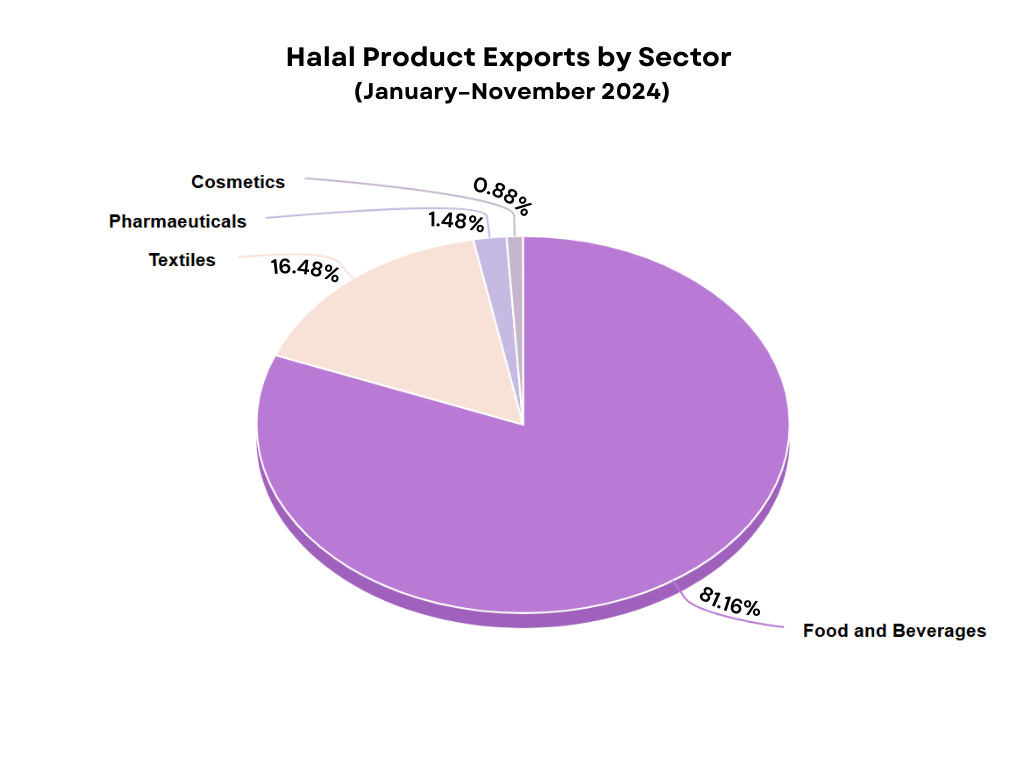
Source: Media Keuangan Kemenkeu/Ministry of Finance (2025)
This performance is supported by innovations across various industries. In food and beverages, exports are driven by palm oil and other vegetable oils, seafood products, and a wide range of processed foods. The pharmaceutical sector exports therapeutic medicines, antibiotics, vitamins, and vaccines, including Indonesia’s halal-certified COVID-19 vaccine, which reached a production capacity of about 33,966 liters in 2023. This significantly boosted the pharmaceutical export performance in 2024. In cosmetics, Indonesia exports haircare products, perfumes, lip products, toiletries, and other chemical-based goods. Indonesia is also recognized as one of the world’s leading producers of patchouli oil – a key ingredient in perfumes, skin care, body care, home fragrances, and aromatherapy
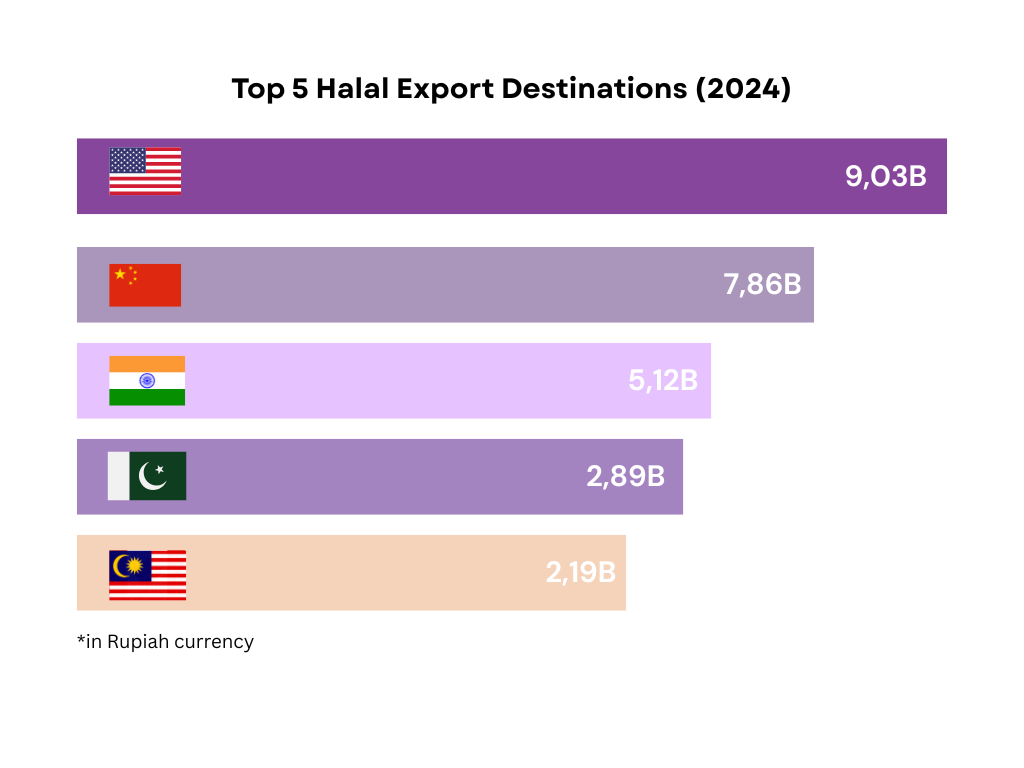
Source: Media Keuangan Kemenkeu/Ministry of Finance (2025)
Global Market Reach and Cooperation
Indonesia’s halal products continue to expand into major international markets, with the United States, China, India, Pakistan, and Malaysia among the largest destinations. Key exports include animal and vegetable oils, seafood, and cocoa-based products. Indonesia has strengthened its global position through various international partnerships and regulatory cooperation agreements, such as the Ministry of Industry’s (Kemenperin) partnership with China’s Food and Drug Corporation Quality and Safety Promotion Association (FDSA), which supports halal supply chain, and regulatory alignment between Indonesia’s BPOM and China’s National Medical Products Administration (NMPA)
Indonesia has also established Mutual Recognition Agreements (MRA) with countries such as China, the United States, Pakistan, Australia, Belarus, São Paulo, and others, reflecting broad international recognition of its halal certification system. These partnerships promote international recognition of halal certification and simplify market entry–creating broader opportunities for economic expansion
Regionally, Indonesia benefits from its involvement in the ASEAN Working Group on Halal Food, which aims to harmonize halal standards and enhance collaboration among Southeast Asian countries. This platform supports Indonesian halal producers–including SMEs–through shared guidelines, training, and regional market access networks, that help streamline compliance and open opportunities for cross-border trade. As ASEAN accelerates its integration in the halal economy, these initiatives play a crucial role in regional growth and support the advancement of Indonesian businesses
Future Outlook: Indonesia’s Road to Becoming a Global Halal Hub
Looking ahead, Indonesia has strong opportunities to grow its influence in the global halal industry. Under the National Medium-Term Development Plan / Rencana Pembangunan Jangka Menengah Nasional (RPJMN) 2025–2029, the Indonesian government is prioritizing the development of the halal industry and accelerating halal certification for MSMEs. Moreover, the Indonesia Halal Product Assurance Organizing Body / Badan Penyelenggara Jaminan Produk Halal (BPJPH) continues to expand its global network of MRAs, enabling mutual recognition of halal certificates across countries–facilitating smoother international trade
Future growth opportunities are also supported by shifting consumer behaviour. The rising focus on sustainability and ESG naturally aligns with halal values, promoting products that are not only permissible but also environmentally responsible. Opportunities also extend to the broader halal lifestyle market, where Indonesian brands are embracing eco-friendly materials and ethical production. This aligns with the values of the halal ecosystem and strengthens Indonesia’s position in emerging lifestyle segments such as fashion, beauty, travel, and wellness–further strengthening its competitive position
Together, these developments reinforce Indonesia’s potential to advance as a leading force in a more sustainable and value-driven global halal economy
Written by Salsabila Shafa Widhi Sunoto – Kadin Business Service Desk